Master's in Law & Legal Studies in France
France offers 46 Master's programmes in Law & Legal Studies across 6 universities, providing a strong offering of postgraduate legal education in one of Europe's most respected legal systems. Institutions including Paris 1 Panthéon-Sorbonne University, Aix-Marseille University, Université Paris-Saclay, and University of Strasbourg are among those offering law Master's programmes. Tuition information varies by programme — check individual listings for current fees, as many French public university programmes carry low or nominal fees.
French Law Master's programmes draw on the civil law tradition and are often structured around specialisations such as international law, European Union law, business law, and human rights. Paris 1 Panthéon-Sorbonne and Aix-Marseille are among the most internationally recognised law faculties in continental Europe. Many programmes offer English-language tracks or bilingual modules, making them accessible to international applicants who do not yet have full French proficiency.

DU - Higher Studies Diploma in Notary Law (DESN)
This program, the Diploma of Higher Studies in Notary Law (DESN), is designed for individuals who have completed a Master's degree in Notarial Law and are undertaking a two-year traineeship in a notary office. It provides specialized legal education organized in conjunction with the National Institute for Notarial Training (INFN). The program ensures students meet the specific legal requirements to become a notary, as defined by French law.
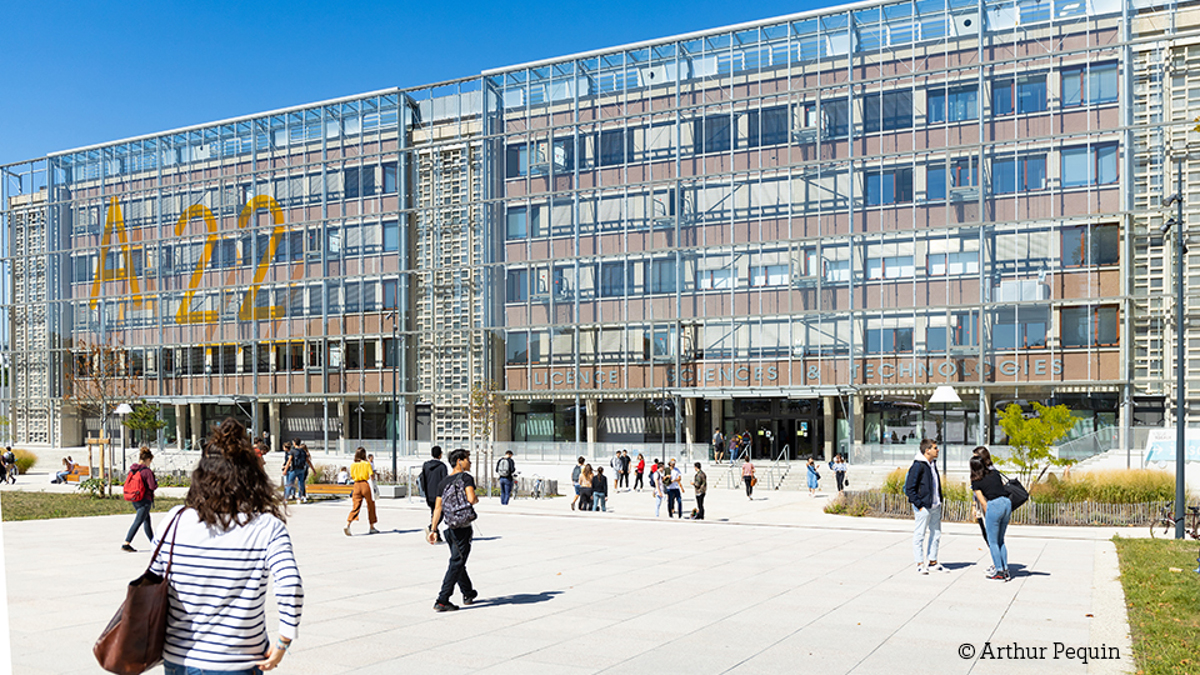
LExFI Graduate Program - Law for Innovation
The LExFI Graduate Program is a research-oriented Master's degree focused on the legal aspects of technological and social innovation. Launched in September 2024, it aims to bridge disciplinary divides and foster a comparative and global legal perspective. The program is designed to prepare students for doctoral studies and also equips them for careers in dynamic economic sectors, public service, and regulated professions. It encourages interdisciplinary learning, drawing from law, science, technology, life sciences, humanities, and social sciences.

M2 Droit de la concurrence et des contrats (Competition and Contract Law)
This Master's degree (M2 level) in Competition and Contract Law offers advanced specialization in both French and European competition law, including its economic dimensions, and in contract law relevant to businesses. The program aims to train highly skilled legal professionals equipped for roles in companies, law firms, or international institutions, or to prepare them for doctoral studies and a career in academia. The curriculum balances theoretical knowledge with practical application through case studies, litigation preparation, and professional practice modules. The program emphasizes the development of critical legal reasoning, analytical skills for complex legal issues, and the ability to engage effectively with economists on legal matters. It also focuses on enhancing professional communication skills in both written and spoken English, as well as teamwork and professional integration within legal environments. Graduates will be proficient in competition and contract law, capable of handling legal reasoning, understanding economic aspects of legal cases, and effectively communicating in professional settings. The program prepares students for diverse career paths in law, international organizations, and multinational corporations, or for further academic pursuits.
M2 Enterprise and European Union Law
This Master's program, specializing in International Law and European Law, offers advanced knowledge and practical skills in European business law, including competition law, public procurement, and taxation. It also delves into the world of businesses, covering corporate strategy, anti-fraud measures, and European economic principles. The program aims to provide students with a comprehensive understanding of the legal and economic landscape relevant to international enterprises operating within the European Union framework.
M2 Human Rights and Companies
This Master's program focuses on the international protection of human rights within the business context. It offers a comprehensive training through both theoretical coursework and practical experience, including a law clinic and an internship. The program is designed to prepare students for immediate entry into the workforce or for further doctoral studies, equipping them with essential knowledge and research methodologies.
M2 International and European Law of Fundamental Rights
This Master's degree focuses on a detailed analysis of international and European systems for the protection of fundamental rights. It explores specific areas such as economic and social rights, migration and asylum law, and the protection of rights in the context of counter-terrorism measures, states of emergency, and the intersection of commerce, investment, environment, and human rights. The program aims to develop students' autonomy, research skills, critical thinking, and argumentation abilities, with a significant emphasis on a research dissertation. Guest speakers, including leading analysts and practitioners, will provide current insights on important topics. Students can also participate in international moot court competitions and engage in legal clinics. An optional internship is available for students participating in moot courts and clinics.
M2 Law, Entrepreneurship and Digital-AI (LEAD-AI)
The M2 Law, Entrepreneurship and Digital-AI (LEAD-AI) Master's program aims to equip students with the knowledge and skills to effectively manage the legal and financial risks associated with starting and running businesses, particularly startups. It focuses on providing legal support tailored to digital business activities and new technologies for innovative companies. The program emphasizes the importance of anticipating legal and financial challenges, making law a supportive tool for developing innovative ventures. It is designed for students seeking to work in the startup ecosystem, either as entrepreneurs or legal advisors to innovative businesses, and is open to backgrounds in law, management, economics, development, entrepreneurship, and design.
Master 2 Amicable Dispute Resolution (formerly Alternative Dispute Resolution Methods)
The Master 2 Amicable Dispute Resolution program is designed for professionals seeking to enhance their skills in resolving conflicts outside of traditional court proceedings. It covers various methods such as mediation, conciliation, amicable settlement hearings, participatory procedures, and collaborative law. The program balances theoretical knowledge with practical application through workshops and simulations, equipping students to effectively integrate these amicable resolution techniques into their professional practice. It also provides the necessary competencies to become a certified mediator or justice conciliator.
Master Droit - Parcours Cyberjustice
The Master's program in Law, with a specialization in Cyberjustice, is designed for students aspiring to careers in various legal professions such as judges, lawyers, or corporate legal counsel. This program addresses the evolving landscape of these professions in the context of new technologies. Students will gain essential legal knowledge for public and private law, crucial for competitive exams and professional entry. The curriculum integrates practical and theoretical aspects of technology use in law, taught by both academics and legal practitioners. Emphasis is placed on developing legal research skills using digital tools, problem-solving abilities, and clear legal communication in both written and oral forms, including proficiency in legal terminology in a foreign language.
Master Droit de l’emploi et des relations sociales
Master Droit de la propriété intellectuelle parcours AUDIANCE
The Master in Intellectual Property Law, AUDIENCE track, offers a multidisciplinary approach to the cultural sector, combining legal knowledge with management, sociology, and aesthetic principles. This program prepares students for leadership roles in public and private cultural institutions, businesses, and local authorities. It focuses on the evolving landscape of contemporary creation, its implementation, and dissemination, with a strong emphasis on applicable law across various cultural domains. Students will gain expertise in cultural policy development, stakeholder engagement, and contract engineering tailored to diverse artistic disciplines.

Master Droit des affaires
The Master in Business Law at Aix-Marseille University is a two-year program designed to equip legal professionals with a deep understanding of common business law, specializing in various professional fields in the second year. This selective program offers 17 different specialization tracks, preparing students for diverse and high-demand careers in the business legal sector. The program emphasizes both foundational legal knowledge and practical skills, including the use of digital tools in law and foreign languages. Students will begin with a strong common core curriculum in fundamental business law topics during the first year, such as corporate law, competition, consumer law, and business in difficulty. In the second year, students choose one of the many specialization tracks, allowing them to tailor their education to specific career aspirations in areas like international business law, intellectual property, banking law, or emerging fields like sports law and Chinese business law. The program also integrates professional internships to provide valuable real-world experience.
Master Droit et pratique de l’assurance
Master Enjeux et techniques de droit social (Social Law Issues and Techniques)
This Master's program provides advanced training in national and supranational labor law and social protection law. It focuses on deepening legal knowledge and developing professional skills through practical application, research, and direct engagement with legal cases via the Law Clinic. The program is designed to equip students with strong legal reasoning abilities and practical expertise in social law. The curriculum spans two years and four semesters, incorporating lectures, practical sessions, research seminars, professional workshops, and hands-on experience at the Law Clinic. A significant component is a five-month internship towards the end of the program, alongside a research mémoire developed over both years, with topics aligned to students' professional aspirations.
Master in Business Law (Mention Droit des affaires)
The Master in Business Law (Mention Droit des affaires) at the University of Bordeaux offers a comprehensive postgraduate specialization in various facets of business law. This program is designed to equip students with advanced legal knowledge and analytical skills applicable to the corporate world. It provides a solid foundation for careers in law firms, financial institutions, and corporate legal departments. The curriculum emphasizes both theoretical understanding and practical application, preparing graduates for complex legal challenges in a globalized economy.
Master in Business Law, Banking Law - Banking Professions (Work-Study)
This Master's program focuses on Business Law with a specialization in Banking Law and Banking Professions. It is designed to provide students with in-depth knowledge of business law, particularly within the banking and finance sectors. The curriculum is delivered through lectures and seminars by university professors and industry professionals from the banking and finance world. The program is structured over two years and involves a work-study component, making it ideal for students seeking practical experience alongside their academic studies. It is jointly organized with the ESBanque (École Supérieure de la Banque) in Schiltigheim.
Master in Business Law, Compliance Officer Specialisation
This Master's program focuses on training specialists in compliance within banking, insurance, and other businesses that have a dedicated compliance department. The curriculum aims to equip students with the necessary skills to excel as compliance officers, enabling them to conduct compliance checks and contribute to defining risk policies related to international embargoes, money laundering, terrorist financing, corruption, organised tax fraud, and social benefit abuse. The program also covers alert management for politically exposed persons and the investigation of alerts within prevention frameworks. Students will be prepared to participate in the implementation and updating of risk prevention and management systems in accordance with current regulations.
Master in Business Law, Corporate Lawyer and Business Advisor (DJCE)
This Master's program in Business Law, with a specialization in Corporate Lawyer and Business Advisor (DJCE), is designed to meet the legal needs of businesses and law firms, both in France and internationally. It aims to bridge the gap between academia and the professional world by integrating theory with practical application. Students will work on real-world cases in groups, mirroring the demands of future roles in law firms or companies. The program is taught by high-level specialists from both professional and academic backgrounds, requiring a high level of commitment and a sustained work pace.
Master in Criminal Law and Criminology
The University of Bordeaux offers a Master's degree in Criminal Law and Criminology, a comprehensive program designed to provide students with advanced knowledge and skills in the field of criminal justice. This master's degree aims to equip graduates with disciplinary competencies in all branches of criminal law and criminology, as well as related subjects. It also focuses on developing professional skills essential for careers in law and justice, including analytical reasoning, legal research, synthesis, written and oral communication, and case analysis. The program is structured into several specialized tracks, allowing students to tailor their studies to specific interests within criminal law and criminology. These specializations cater to a wide range of career aspirations within the legal system and related fields.
Master in Employment Law and Social Relations
The Master in Employment Law and Social Relations is a two-year program designed to provide advanced knowledge in labor law, with a strong emphasis on practical application within businesses, particularly in human resources. The curriculum includes high-level coursework and workshops led by academics and industry professionals. The second year offers an apprenticeship (alternance) option for practical work experience.
Master in Environmental and Urban Law
This Master's program trains generalist legal professionals specializing in environmental issues. It equips students with the ability to understand complex environmental challenges and develop legal solutions through a multidisciplinary approach. Graduates will gain transversal legal skills and an understanding of scientific and technical aspects of environmental issues, preparing them for the ecological transition. The program fosters analytical and synthetic thinking, alongside teamwork and interdisciplinary collaboration. Graduates can pursue careers in the private or public sector, or continue into research by undertaking a PhD.
Master in International Law
This Master's program in International Law provides students with a deep understanding of international law in both its public and private aspects. It is designed to equip students with interdisciplinary knowledge and skills, preparing them for advanced academic research, such as pursuing a thesis, or for direct entry into the professional world. The program fosters skills applicable to various professional environments, including advisory and expert roles in areas like business law, investment law, immigration law, and arbitration, as well as positions within institutional settings like international organizations, NGOs, specialized international courts, and governmental departments.
Master in Justice, Litigation, and Procedures
The Master's degree in Justice, Litigation, and Procedures at the University of Bordeaux offers specialized pathways for students interested in the legal field. This program is designed for individuals holding a Bachelor's degree in Law or an equivalent qualification. Priority will be given to candidates who have completed coursework in civil and criminal procedure, including tutorials, and have demonstrated satisfactory academic performance in these areas. The program aims to equip students with comprehensive knowledge and skills in handling legal disputes and procedures.
Master in Law, Energy and Sustainable Development Management
This Master's program, offered by the Faculty of Law, Political Science, and Management, focuses on equipping students with essential skills for the green economy. It aims to train legal and management professionals who are knowledgeable about sustainable development and energy management, addressing the current needs of economic actors in developing energy strategies and adopting sustainable development practices. The program recognizes that all organizations, public and private, must manage energy costs and improve efficiency. Graduates will be prepared to act as vital intermediaries between policymakers, engineers, and technicians, contributing to energy efficiency improvements and the development of renewable energy sources. The curriculum also encourages research opportunities, including CIFRE theses, in collaboration with industry clusters and European networks.
Master in Law, Health Data Law and Governance (Work-Study)
The "Health Data Law and Governance" (DGDS) Master's program is designed to meet the growing demand for professionals who can manage and leverage health data. The healthcare sector generates vast amounts of data that are crucial for research, patient care, public health decisions, and the development of innovative technologies. This program offers a unique blend of legal and technical knowledge, enabling students to understand systemic issues, manage projects, navigate regulations, and engage in interprofessional and international discussions. The second year of the Master's program is conducted through a work-study (alternance) format, fostering interdisciplinary collaboration with academics and industry professionals.
Master in Law: Digital Economy Law
This Master's program focuses on the legal aspects of the digital economy, equipping students with essential skills for the digital transformation. It aims to train legal professionals who understand both the law and the digital landscape, with a technical sensibility. The curriculum is multidisciplinary, covering private and public law, economics, and management. Students will also gain technical knowledge to navigate new technologies and the digital transformation of organizations. Key learning objectives include understanding the digital environment, digital market regulations, data protection (GDPR), cybersecurity, intellectual property, e-commerce contracts, and the environmental impact of digital technologies.
Master in Legal History and Institutions (Culture Juridique Specialisation)
The Master in Legal History and Institutions, specifically the Legal Culture specialisation, is designed for students interested in research in legal history or in broadening their general knowledge. It requires candidates to have a grasp of fundamental legal concepts, the ability to present legal arguments clearly, and knowledge of key periods in legal and institutional history. This master's program serves as a foundation for professional development, whether through preparation for competitive examinations or the completion of research work. It aims to equip students for careers in legal and judicial professions, public service, and roles in heritage conservation. The program encourages international engagement, with opportunities for study abroad and the inclusion of courses taught by visiting international professors. It is closely linked to the CAHD (Aquitaine Centre for Legal History) research team, allowing students to participate actively in scientific and cultural activities within a recognised research environment.
Master in Liberties Law, Specialization in Humanitarian Law and NGOs
This Master's program, offered by the Faculty of Law, Political Science and Management at the University of Strasbourg, provides specialized legal training in humanitarian law and the law governing NGOs. It is designed for students who wish to develop expertise in managing legal aspects of humanitarian crises, asylum, and refugee law, as well as the operational and legal frameworks of non-governmental organizations. The program emphasizes both theoretical knowledge and practical skills, preparing graduates for roles in international organizations, NGOs, and specialized legal practices.
Master in Political Science
The Master in Political Science at the University of Bordeaux offers specializations focusing on comparative politics, international relations, and global security. This program is designed to provide students with a deep understanding of political thought, sociology, and contemporary global issues. Graduates will develop advanced analytical skills for complex situations, enabling them to understand the historical, political, and philosophical underpinnings of current events. The curriculum emphasizes comparative approaches to political regimes, including democracies, totalitarianism, and authoritarianism, with a particular focus on emerging powers and Central/Eastern European countries. The program aims to equip students with the expertise to analyze the circulation of ideas and the functioning of political systems.
Master in Private Law
This Master's program in Private Law aims to provide students with comprehensive knowledge in private law, focusing on core private law subjects. The curriculum emphasizes civil law, equipping graduates with the ability to understand and manage complex legal issues. This program is designed to train highly competent generalists who can handle intricate legal cases and dossiers, making them suitable for roles such as real estate agents and insurance professionals.
Master of Health Law
The Master in Health Law offers comprehensive training for students wishing to deepen their knowledge in a rapidly evolving legal field and to pursue professional careers in health law. The program prepares students for roles in management and expertise within health institutions (public and private) or medico-social organizations, as well as for careers focused on compensating victims of personal injury. The curriculum includes exercises like case studies and mock exams that align with the requirements of health sector competitions and professional examinations, such as those for lawyers. Professionalization is integrated from the first year with a dedicated unit, and further solidified in the second year through a mandatory internship.
Master's Degree in Human Rights and Humanitarian Law (M2)
This Master's program (M2) provides advanced theoretical and practical knowledge in human rights, humanitarian law, international criminal law, and asylum law. It is designed to prepare students for high-level professional roles or doctoral research. The curriculum includes in-depth study of international and European human rights protection, asylum and immigration law, humanitarian law, and international criminal law. Students will benefit from practical experience through a minimum three-month internship and participation in the "Asylum Law" legal clinic, where they will work on actual asylum law cases. The program culminates in the mandatory writing of a research thesis, allowing students to deepen their knowledge and engage in individual research. Graduates will be well-equipped for careers in diplomacy, international and European organizations, NGOs, law firms specializing in human rights and humanitarian law, and further academic research.
Master's Degrees in Law
The University of Bordeaux offers a comprehensive range of Master's degrees within its Faculty of Law, Political Science, and Management. These programs are designed to provide advanced knowledge and specialisation in various fields of law and related disciplines. Students can choose from numerous specialized tracks, each focusing on distinct areas to prepare them for specific legal careers or further academic pursuits. The Master's level education at Bordeaux aims to equip students with in-depth theoretical understanding and practical skills. The curriculum is structured to encourage critical thinking, research abilities, and the application of legal principles. The university is committed to providing a high-quality academic environment, fostering expertise in a dynamic legal landscape.
Master's in Business Law - Internet Law and Information Systems Pathway
This Master's program, specializing in Internet Law and Information Systems, aims to equip students with the necessary skills to address legal challenges arising in the digital environment. The curriculum provides a comprehensive understanding of how to prevent and resolve legal issues related to the internet. It covers core subjects like intellectual property (copyright, software, databases, trademarks, domain names), contract law (e-commerce contracts, liability of internet service providers and Web 2.0 platform operators), and litigation techniques. The program also delves into various legal fields impacted by the internet, including criminal law (online press offenses, cybercrime), image rights, audiovisual law, personal data protection, e-administration, digital freedoms, social law, competition law, and social networks. While primarily taught in French, the second year of this Master's program can be offered through distance learning under specific conditions. The program is multidisciplinary, combining a strong foundation in private and public law with an introduction to IT and legal English relevant to the internet and multimedia. Course content is regularly updated to reflect current legal developments.
Frequently asked questions
How many Master's in Law & Legal Studies programmes are available in France?
+
There are 46 Master's programmes in Law & Legal Studies across 6 universities in France.
How much does a Master's in Law & Legal Studies cost in France?
+
Tuition varies by programme — check each listing directly, as French public universities often charge low registration fees, though some professional programmes may carry higher fees.
Which universities in France offer a Master's in Law & Legal Studies?
+
Programmes are offered at Paris 1 Panthéon-Sorbonne University, Aix-Marseille University, Université Paris-Saclay, Paris Cité University, University of Bordeaux, and University of Strasbourg.
Can international students apply to Law Master's programmes in France?
+
Yes. Most French law Master's programmes are open to international applicants. Language of instruction may be French, English, or bilingual, so check requirements for each programme. A relevant undergraduate law degree or equivalent is typically required.
What are typical entry requirements for a Master's in Law & Legal Studies in France?
+
Applicants generally need a bachelor's degree (licence) in law or a closely related discipline. Programmes taught in French require French language proficiency, while English-taught tracks require an English language qualification such as IELTS or TOEFL.