Study in France
France lists 385 programmes across 10 universities, all with tuition set at zero — making it one of the most cost-effective destinations in Western Europe for international students. The catalogue spans prestigious institutions such as Sciences Po, Paris 1 Panthéon-Sorbonne University, Université Paris-Saclay, and the University of Strasbourg, covering social sciences, law, engineering, humanities, and more.
The University of Bordeaux and Institut national des sciences appliquées de Lyon (INSA Lyon) further illustrate the geographic and disciplinary spread available. While administrative fees exist at public universities, tuition in the traditional sense is free for all students, including international applicants, at these institutions. A sound knowledge of French is required for most programmes, though English-taught master's tracks are growing in number.

Advanced Studies Diploma in Medical Sciences (DFASM)
The Advanced Studies Diploma in Medical Sciences (DFASM) is designed to equip students with the core competencies needed for the third cycle of medical studies, preparing them for hospital or outpatient practice. The program focuses on developing skills as a clinician, communicator, collaborator, public health advocate, reflective practitioner, scientist, and ethical professional. Teaching emphasizes common, severe, or public health-relevant conditions. The curriculum aims to deepen knowledge of pathophysiological processes, pathology, therapeutic foundations, and prevention, alongside fostering scientific inquiry and clinical reasoning. Students will also develop generic competencies essential for future medical specialization. The DFASM includes a common core curriculum and a personalized, multi-year track. This track allows students to choose electives to deepen knowledge in transversal or multidisciplinary medical fields, focus on research, or explore non-medical disciplines. The personalized path can include units freely chosen from various university offerings, ideally building upon prior learning.

Africa-Europe Cooperation for the Green Transition
The Africa-Europe Cooperation for the Green Transition certificate programme equips professionals worldwide with the knowledge and skills to advance sustainable development and green transformation. Co-designed by Sciences Po Executive Education and the University of Cape Town's Nelson Mandela School of Public Governance, this program focuses on fostering transformative change through collaboration and innovation. It addresses critical issues in public policy, climate-resilient development, and sustainable finance, specifically within the context of Afro-European cooperation and aligned with the UN Sustainable Development Goals (SDGs). Participants will gain insights into identifying key cooperation levers between Africa and Europe, designing effective policies and strategies, and contributing to a shared, sustainable future.
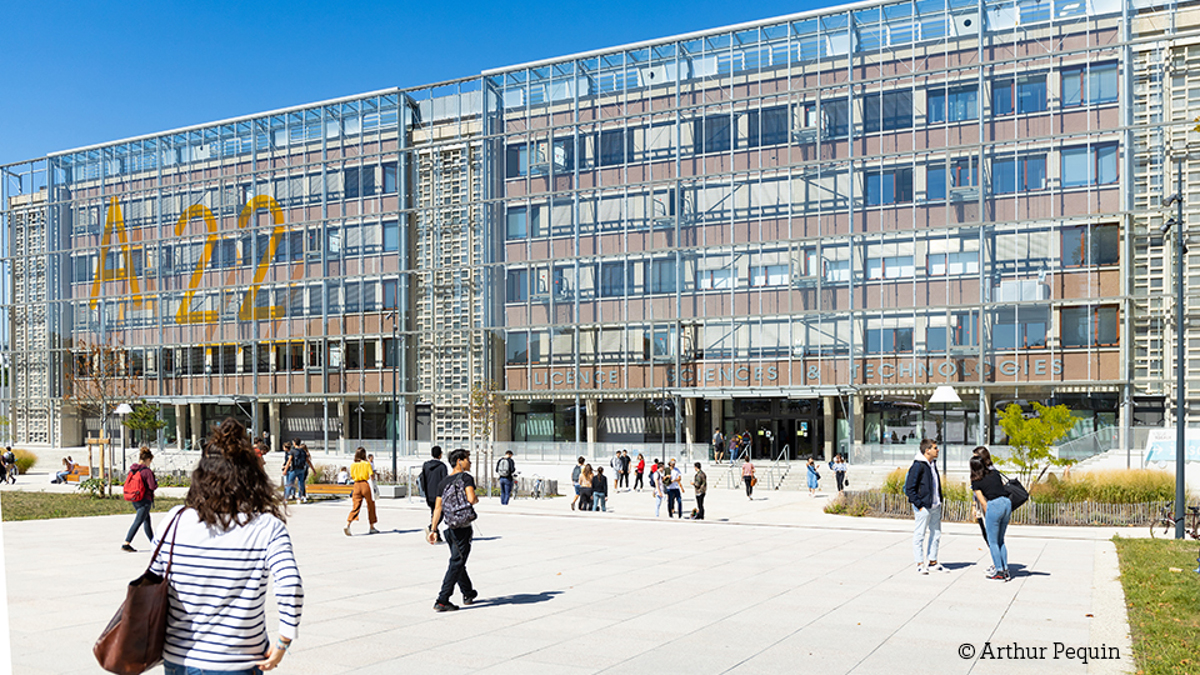
Bachelor in Science and Techniques of Physical Activity and Sports: Adapted Physical Activity and Health
This Bachelor's degree in Science and Techniques of Physical Activity and Sports (STAPS) focuses on Adapted Physical Activity and Health (APA-Santé). The program aims to equip students with a solid foundation of scientific, technological, and technical knowledge and skills in the APA-Santé field. Graduates will be prepared to autonomously diagnose, implement, and evaluate projects within the APA-Santé professional sector, and will gain valuable pre-professional experience through practical application.
Bachelor of Arts
The Bachelor of Arts program at Sciences Po is a three-year undergraduate degree. The third year of the program is a mandatory period of international experience, which can be fulfilled through a study abroad semester at one of Sciences Po's 445 partner universities or a combination of a study semester and a full-time internship. This year abroad is designed to complement the coursework completed in the first two years at Sciences Po's Undergraduate College, allowing students to deepen their understanding within a chosen region of focus or explore new global perspectives.

Bachelor of Economics - International Track
The Bachelor of Economics - International Track at the Sorbonne School of Economics is a comprehensive undergraduate program fully taught in English, commencing in September 2025. It offers a robust foundation in economic theory and analytical skills, preparing students for advanced studies or careers in the global economy. The curriculum balances theoretical and applied economics, with a strong emphasis on quantitative methods and the development of critical thinking and communication skills. This program is designed for both French and international students seeking a high-quality economics education in a dynamic, international environment.
Bachelor Universitaire de Technologie (BUT)
The Institut Universitaire de Technologie (IUT) Robert Schuman, part of the University of Strasbourg, offers the Bachelor Universitaire de Technologie (BUT), a three-year professional degree equivalent to a bachelor's degree (BAC+3). This program is designed to align with international standards, facilitating student exchanges and global career opportunities. The curriculum is heavily focused on professional skills, developed in collaboration with industry experts. Students benefit from small group teaching, tutorials, and practical work, with 40-50% of the course dedicated to practical classes and professional role-playing, including significant project work and work placements. A work-study option is available, typically in the final two years of the program.
Board Director Certificate
The Board Director Certificate program is designed for individuals seeking to enhance their capabilities in corporate governance. In today's business environment, the role of a board director is increasingly demanding, requiring a comprehensive understanding of responsibilities, strategic thinking, and effective interpersonal skills. This certificate program aims to equip participants with the necessary knowledge and competencies to navigate the complexities of board directorship and contribute effectively to organizational success. The program focuses on core modules covering the fundamental aspects of board director responsibilities, strategy formulation, risk management, and human capital leverage. It also offers elective modules allowing for specialization in areas such as directorship in SMEs, European governance, or roles within specific sectors like banking or startups. An optional module in finance and accounting is also available to strengthen foundational knowledge.
Cancer Biology Graduate Program
The Cancer Biology Graduate Program at the University of Bordeaux offers integrated international training for both Master's and PhD levels. It focuses on interdisciplinary and translational research in oncology, aligning with the university's initiatives in this field. The program aims to provide students with deep knowledge of fundamental cellular and molecular cancer biology, alongside expertise in translational, clinical, and technological research. Students will engage in laboratory internships from the Master's level and have the opportunity to pursue a PhD. The program is supported by major public research institutions and selected by the French 'Investment for the Future' program.
Capacité de médecine
The 'Capacité de médecine' is a national diploma offered by the Faculty of Medicine, Midwifery, and Health Sciences at the University of Strasbourg. This program is designed for qualified doctors (general practitioners or specialists), whether French or international, who wish to acquire additional competencies or broaden their scope of practice. While not conferring the title of specialist recognised by the French Order of Physicians, these capacities are acknowledged by the order as titles demonstrating further expertise to patients. The program is subject to official authorisation from the Ministry of Higher Education, with the University of Strasbourg holding this accreditation for a four-year period.
Capacité en droit
The Capacité en droit is a two-year program designed to provide foundational legal knowledge. It is particularly suited for individuals who do not hold a baccalaureate but wish to pursue higher education in law or enter certain administrative roles. The program offers flexible study modes, allowing students to attend evening classes in person or study independently using online materials. Some evening lectures are also broadcast live online for remote access. Students can choose to complete the program in one or two years. An early assessment in October helps students decide which study pace is best for them. The first year focuses on Public Law, Civil Procedure, and Family Law, alongside introductions to Objective and Subjective Law. The second year covers Obligations, Criminal Law and Procedure, Administrative Law, Commercial Law, and Labor Law. All examinations must be taken in person at the faculty.
Certificat de capacité d'orthophoniste (CCO)
This program leads to the Certificat de capacité d'orthophoniste (CCO), equivalent to a Master's degree, preparing you for a career as a speech therapist. The five-year curriculum is structured into 300 ECTS credits, comprising a 3-year bachelor's cycle and a 2-year master's cycle. It combines theoretical coursework with extensive clinical practice through internships in various settings like nurseries, schools, private practices, institutions, and hospitals.
Certificat de capacité d'orthoptiste
This program trains students to become orthoptists, paramedical professionals specializing in the assessment, rehabilitation, and examination of functional visual disorders. Orthoptists work with patients of all ages, from infants to the elderly, on medical prescription. They are skilled in detecting, analyzing, and treating visual anomalies such as strabismus, amblyopia, oculomotor imbalances, neuro-ophthalmological conditions, and low vision. The training also covers performing exploration examinations like perimetry, corneal topography, or OCT under ophthalmologist supervision. Graduates can work in various settings including private practice, hospitals, medical-social structures, or ophthalmology clinics.
Certificate in Corporate Governance
This program is designed for experienced board members and those aspiring to join a board, focusing on the essential behaviors, tools, knowledge, and skills required for successful corporate governance. It aims to enhance expertise, provide international perspectives, and prepare participants for the evolving demands of board directorship. The curriculum covers fundamental aspects of board responsibilities, strategy, risk management, human capital, and practical simulations of board meetings. It also offers elective modules on specific governance challenges, such as those in SMEs, European contexts, banking, or startups, with an optional module on finance and accounting fundamentals. This certificate is ideal for seasoned directors seeking a high-level qualification, newly appointed directors, and future board members looking to strengthen their understanding and practice of effective corporate governance.
Certificate in International Relations and Diplomacy
This certificate program focuses on the complexities of international relations and diplomacy in an increasingly unpredictable and volatile world. It aims to provide participants with a comprehensive understanding of major global issues and contemporary geostrategic challenges. Through engagement with leading experts in defense, political science, and public policy, you will explore current international dynamics and develop insightful responses to global challenges.
Classes préparatoires aux grandes écoles (CPGE)
The Classes Préparatoires aux Grandes Écoles (CPGE) are selective, two-year programs offered in lycées (high schools) designed to prepare students for competitive entrance exams to prestigious 'Grandes Écoles' (prestigious higher education institutions) and engineering schools in France. These programs provide a deep, multidisciplinary education based on national curricula. Admission is based on a review of the student's academic record and requires a high school diploma (baccalauréat) or equivalent. While not a diploma in themselves, the CPGE programs grant 60 European credits for the first year and 120 for the full two-year course, aligning with the European Bologna Process (Licence, Master, Doctorate). This allows students to pursue university studies if they do not pass the competitive exams. Students can opt for a third year in exceptional circumstances. The CPGE are organized into three main branches: Economic and Commercial, Literary, and Scientific, each with further specializations.
College of Science and Technology Programs
The College of Science and Technology at the University of Bordeaux offers a wide range of programs across various scientific disciplines. With nearly 9,500 students, the college focuses on creating a strong connection between its academic offerings and the high-quality research conducted at the university. It aims to provide students with career guidance, develop international training opportunities, and promote scientific and technical knowledge. The college is spread across several campus locations, including Talence, Pessac, Gradignan, Mérignac, Bordeaux, Agen, and Arcachon.
CPBx
Data Science for Economics and Business (DS2E)
The Data Science for Economics and Business (DS2E) Master's program focuses on applying data science techniques to the fields of economics and management. In today's world, large volumes of data are generated, stored, and processed, presenting significant challenges and opportunities for businesses and economic actors. This program equips students with the latest quantitative methods to extract value from Big Data and inform strategic decisions in diverse organizational contexts. The curriculum is designed to help students identify economic trends, understand the impact of economic policies, improve performance measurement, and develop new performance indicators.
Diplôme d’Accès aux Études Universitaires (DAEU)
The Diplôme d’Accès aux Études Universitaires (DAEU) is a national diploma equivalent to the French Baccalauréat. It is designed for individuals who do not hold a high school diploma but wish to pursue higher education. Obtaining the DAEU opens doors to universities, allows participation in competitive examinations, development of new skills, and professional advancement. It offers a second chance for adults to re-enter the academic system and build a new future.
Diplôme d’État d’Ingénierie Sociale (DEIS)
The Diplôme d’État d’Ingénierie Sociale (DEIS) is designed to train expert managers and project developers in social and medico-social fields. Graduates will be equipped to undertake roles involving expertise, consulting, project development and management, and evaluation within social policies and interventions. The program focuses on developing skills as "cadres développeurs" (development managers) and "cadres managers" (management managers), with a strong emphasis on human resource mobilization. This qualification prepares professionals for positions within local authorities, public bodies, consulting firms, training institutions, or associations in the social, medico-social, or health sectors.
Diplôme d'État de masseur-kinésithérapeute
This program prepares you to become a certified state physiotherapist (masseur-kinésithérapeute). You will learn to assess patients, establish a physiotherapy diagnosis, and develop personalized treatment plans. The curriculum focuses on both manual and instrumental therapeutic techniques, as well as preventive healthcare and patient education. The role of a physiotherapist extends to promoting health, educating patients, and preventing functional decline. You will also gain skills in therapeutic exercise, rehabilitation, and potentially sports physiotherapy and wellness practices like balneotherapy. Graduates will be equipped to analyze and evaluate patient conditions, design and implement therapeutic projects, and foster therapeutic relationships. The program also emphasizes professional development, research skills, and the ability to manage or organize within a healthcare setting, collaborating with other professionals.
Diplôme d'études spécialisées (DES)
Diplôme d’études spécialisées complémentaires (DESC) de Biologie Médicale
The Diplôme d’études spécialisées complémentaires (DESC) in Medical Biology offers advanced specialization in various fields of biological sciences. This program is designed for individuals seeking to deepen their expertise in specific areas of medical biology. The specializations available cover a wide range, including hormonal and metabolic biochemistry, infectious agents, molecular biology, human cytogenetics, biological hematology, pharmacokinetics, radiopharmacy, radiobiology, and biological toxicology.
Diplôme d'ingénieur
Diplôme de docteur en médecine
Doctor of Pharmacy
The Faculty of Pharmaceutical Sciences at the University of Bordeaux offers a comprehensive program leading to the state-certified Doctor of Pharmacy diploma. This program is designed to train future pharmacists and health professionals, equipping them with expertise in medications, health products, and public health initiatives. The faculty emphasizes a strong international outlook and fosters close ties with the professional pharmaceutical community, ensuring graduates are well-prepared for diverse career paths. The curriculum integrates applied and fundamental research, focusing on innovation in medication and health products. This dual approach ensures a strong transfer of skills to industry and contributes to advancements in public health. Graduates gain dual expertise, leading to a high employability rate in various sectors of the pharmaceutical profession.
Doctorate (PhD) at University of Strasbourg
The University of Strasbourg offers doctoral studies (PhD) for students aiming to pursue a research career. To be admitted as a PhD student, you must first secure the agreement of a PhD supervisor from a research unit, define a thesis subject, and arrange for funding. The "Habilitation à Diriger des Recherches" (HDR) is a higher qualification allowing you to supervise doctoral theses and apply for university professor positions. This requires a prior doctorate and involves a two-phase enrollment process: an authorization request followed by the submission of a defence file. Admission requirements, including minimum Master's degree results, funding, and language proficiency (French/English), are detailed by each specific PhD school. International qualifications equivalent to a French Master's degree may require a derogatory admission procedure. All PhD students, regardless of funding source, must also pay the "Contribution to Student and Campus Life" (CVEC) annually.
DU - Higher Studies Diploma in Notary Law (DESN)
This program, the Diploma of Higher Studies in Notary Law (DESN), is designed for individuals who have completed a Master's degree in Notarial Law and are undertaking a two-year traineeship in a notary office. It provides specialized legal education organized in conjunction with the National Institute for Notarial Training (INFN). The program ensures students meet the specific legal requirements to become a notary, as defined by French law.
Dual Degree: Sciences Po – Peking University
This two-year dual Master's degree program, offered jointly by Sciences Po's Paris School of International Affairs (PSIA) and Peking University's School of International Studies (SIS), provides a unique opportunity to study international affairs across two continents. The program emphasizes multidisciplinary learning, covering political science, international political economy, global security, and development issues with a focus on European and Asian perspectives. You will spend your first year at Sciences Po in Paris, specializing in one of PSIA's Master's programs, and your second year at Peking University in Beijing, focusing on International Relations with an emphasis on security, development, and the Asia-Pacific region. This program is designed for students seeking a comprehensive understanding of global issues from both Western and Eastern viewpoints. You will benefit from the academic resources and student services of both institutions throughout your studies. Upon successful completion, you will receive a Master's degree from Sciences Po and a Master's Degree in International Relations from Peking University.
Economics of Innovation and Knowledge
This Master's program delves into the economics of innovation and knowledge, equipping students with advanced analytical frameworks and empirical tools. You will gain a deep understanding of how innovation drives economic dynamics, exploring key concepts, paradigms, and theories. The curriculum examines the role of networks in innovation processes, from fostering creativity to managing partnerships and supplier relations. You will learn to analyze economic relationships and real-world data using network analysis techniques. The program also addresses the historical and statistical perspectives on innovation, the debate between technology push and demand pull, and the relationship between market structures and innovation incentives, utilizing decision theory and game theory. An evolutionary approach is used to study industrial and innovation dynamics.
EM Strasbourg Business School Programs
EM Strasbourg Business School, affiliated with the University of Strasbourg, is a leading institution dedicated to educating responsible and agile managers with a European perspective. It is the only French business school integrated into a globally recognized university, boasting a history of Nobel laureates. EM Strasbourg holds international accreditations from AACSB, AMBA, and EQUIS, underscoring the quality of its teaching and research. The school fosters an international environment with a significant portion of its student body being international. Situated in Strasbourg, a European capital, EM Strasbourg benefits from its strategic location in the heart of Europe and has over 220 international partnerships across more than 50 countries. The alumni network is extensive, comprising over 27,000 graduates worldwide. Students can engage in 15 student associations, including the International Student Association, to develop project management skills and nurture their talents.
Exchange Programme
Sciences Po offers a dynamic international exchange program, making a year abroad a mandatory part of its curriculum for over twenty years. With 480 university partnerships across five continents, Sciences Po facilitates study abroad opportunities for over 1500 students annually at the Bachelor's and Master's levels, as well as for doctoral candidates. Each year, the university welcomes over 2200 international exchange students who integrate into the undergraduate college, Master's programs, or doctoral studies, becoming integral members of the vibrant Sciences Po community.
Executive Master in Communication
This Executive Master program leverages social science insights to enhance your communications strategy and leadership skills. It is designed for professionals seeking to deepen their understanding of communication in a strategic context, particularly within the digital age. The program aims to equip participants with the analytical tools to evaluate situations and improve both written and oral communication, preparing them to navigate the evolving challenges of the communication field.
Executive Master in Health and Public Policy Management
The Executive Master in Health and Public Policy Management provides a comprehensive understanding of the complexities within healthcare systems. The program blends theoretical knowledge with practical skills, delivered by a faculty comprising healthcare professionals, academics, and industry experts. It culminates in an individual thesis, guided by a faculty mentor. Designed for working professionals, the program spans two years, with classes held two days per month.
Executive Master Leadership Trajectories
The Executive Master Leadership Trajectories is designed for managers and executives facing profound environmental, digital, and societal transformations. This program aims to strengthen your command of strategy, decision-making, influence, leadership, and negotiation. You will gain a comprehensive view of your professional ecosystem and an in-depth understanding of its core functions. The curriculum combines innovative management practices, robust foundations in business disciplines, and personalized coaching to help you develop solutions and effectively lead your teams. This program is delivered in French.
Executive Master of Public Administration
The Executive Master of Public Administration (EMPA) at Sciences Po is designed for mid-career and senior-level managers seeking to enhance their expertise and leadership skills in public administration. This program offers innovative and international training in public affairs, equipping participants with the knowledge and abilities needed to navigate complex policy environments across public, private, and non-profit sectors. The EMPA focuses on developing a deep understanding of public action, addressing contemporary challenges in democratic societies, and managing transformation within public service organizations. Graduates will be prepared to make informed decisions, strengthen strategic leadership, design and implement effective public policies, and combine rigorous academic knowledge with practical public decision-making skills.
Exploring AI for Communication and Marketing Professionals
This short program is designed for communication and marketing professionals to explore the impact of Artificial Intelligence (AI) on their fields. As AI technologies rapidly advance, they present both challenges and opportunities, potentially transforming core practices, skills, and daily activities. This course aims to uncover how the AI revolution may exceed the influence of the digital age on these professions. The program is delivered in French.
Formation to the profession of State Registered Operating Room Nurse (IBODE)
The University of Strasbourg offers a Master's degree program for aspiring State Registered Operating Room Nurses (IBODE). This program has been updated in 2022 to align with new certification standards, focusing on a revised structure of activities and skills. Graduates are awarded a Master's degree. The curriculum is designed around 8 key activities and 5 core competency blocks. This structure facilitates the validation of prior experience and learning (VAE) and allows for shared transversal teaching modules across various paramedical training programs.
General Diploma in Medical Sciences (DFGSM)
This program is the first cycle of medical studies, designed to equip you with the fundamental scientific knowledge required for a future career in medicine. It covers a broad range of basic sciences, including biology, exact sciences, and social sciences, providing a strong foundation for advanced medical learning. The curriculum emphasizes a deep understanding of both healthy and ill individuals, incorporating semiology (the study of signs and symptoms). Four core principles guide this education: focusing on essential concepts for continuous learning rather than exhaustive memorization, promoting active student participation through practical work and case studies, fostering a multidisciplinary approach by integrating various specialists, and encouraging openness by preparing students for diverse professional paths within medicine. Elective units allow for specialized study or even initiation into research. The program's structure includes a common core curriculum with specific learning objectives outlined in official documents. It aims to harmonize teaching across universities while allowing for local adaptation. This first cycle is crucial for developing the core competencies and adaptability needed for further medical training.
General Diploma in Midwifery Sciences (DFGSMa)
The University of Strasbourg, through its Faculty of Medicine, Midwifery, and Health Sciences, offers the General Diploma in Midwifery Sciences (DFGSMa). This program is designed to equip students with a high level of knowledge and skills essential for the practice of midwifery. The curriculum is structured around acquiring foundational scientific knowledge, engaging in research, understanding human physiology and pharmacology, and developing a fundamental understanding of the human being. The program aims to foster autonomous, responsible, and reflective professionals.
Generative AI for Executives, Managers, and Organisations
This intensive short program is designed for executives, managers, and organizational leaders seeking to understand and leverage the power of Generative AI. It covers the fundamentals of AI and generative AI, exploring its technological underpinnings, current limitations, and the potential for a more conscious adoption. The program emphasizes practical applications for enhancing individual productivity through mastering prompt engineering and utilizing AI tools for content creation, data analysis, and ideation. Furthermore, it delves into the broader implications of Generative AI within organizations, including ethical, social, and economic considerations, as well as legal aspects and change management strategies. Participants will learn methodologies to identify and develop relevant use cases for their specific organizational contexts.

GEOG3203: Géopolitique
This course, GEOG3203: Géopolitique, is offered in the second semester and is part of the Geography discipline within the Social Sciences department. It is an L3 (third year of Bachelor's degree) level course. The course is open to external auditors.
GEOG4205: Law and the Making of Space: Geography and Law
This course explores the intricate relationship between geography and law, examining how legal systems shape the production and experience of space. Emerging in the early 1990s, this field of study, known as 'geo-legal studies,' moved beyond merely describing the legal frameworks influencing socio-spatial phenomena. Instead, it analyzes the active role of law in constructing and defining our spatial realities. The course provides an introduction to this dynamic research area. Through a combination of general presentations, discussions of key academic articles and books, and case studies, students will gain a comprehensive understanding of how legal norms influence societal geography.
Geopolitics and Security
This intensive short program provides a comprehensive examination of the evolving global landscape through the lens of geopolitics and security. It delves into current challenges, explores the interplay of military, political, and technological factors shaping international power dynamics, and analyzes the impact of emerging technologies and hybrid warfare. The program is designed to foster strategic thinking by leveraging real-world scenarios and expert-led discussions.
HR Management: Reinventing the HR Function
In today's rapidly evolving world, organizations face unprecedented challenges. This certificate program is designed to help HR professionals reinvent their function and update their core frameworks. It encourages participants to anticipate the impact of societal changes on HR roles and responsibilities, preparing them to effectively support their organization's transformation. The program aims to cultivate experts proficient in the latest HR innovations who can create significant value for their companies.
Infirmier en Pratique Avancée (IPA) - Advanced Practice Nurse
The Advanced Practice Nurse (IPA) program is designed to equip nurses with advanced skills to meet evolving healthcare needs and enhance coordinated patient care. Recognized at the Master's degree level, this program trains nurses to autonomously manage chronic conditions, focus on prevention, and coordinate care pathways. The university education expands clinical, organizational, and relational competencies, fostering critical thinking about nursing science models and theories.
Influencing and Managing Multilateral Negotiations
This short program is designed for professionals in diplomacy, business, and international relations who need to navigate complex multilateral negotiations. It focuses on developing essential skills for managing diverse stakeholders, building coalitions, and achieving objectives in international forums. The program equips participants with structured frameworks and analytical tools to enhance their negotiation effectiveness. By building a strong foundation in bilateral negotiation principles, participants will gain the expertise needed to excel in challenging multilateral environments. The curriculum covers strategies for overcoming obstacles, managing difficult negotiators, influencing stakeholders, and facilitating consensus. The program aims to improve self-awareness, empathy, and strategic planning for successful outcomes in high-stakes negotiations.
INFO3104: Theory of Programming
This course introduces mathematical methods for defining what a program is and how it executes. This approach allows for the formulation and proof of properties concerning program behavior, such as the absence of bugs or adherence to expected specifications. The course covers various concepts essential for understanding the theoretical underpinnings of programming languages and formal verification.
Institut de préparation à l'administration générale (IPAG)
The Institut de préparation à l'administration générale (IPAG) in Strasbourg prepares students for administrative positions within the French public service. It offers training for Category A and A+ civil service entrance examinations across the State, territorial, and hospital sectors. The IPAG caters to a diverse audience, including university students nearing the end of their studies, job seekers, individuals seeking a career change, and current public service employees aiming for internal promotions. IPAG Strasbourg is recognized as one of the top institutions of its kind in France. Its distinctive approach emphasizes professionalization, with dedicated instructors who possess practical experience in competitive examinations and strong partnerships with major public institutions.
Integrated Preparatory Cycle (Cycle préparatoire intégré - CPI)
The Integrated Preparatory Cycle (CPI) is a two-year scientific program designed to prepare students for a career as an engineer in fields such as chemistry, chemical engineering, materials science, energy, environment, pharmacy, and agrofood. This program serves as a pathway to enter one of the 20 French engineering schools within the Fédération Gay-Lussac network, specializing in chemistry and chemical engineering. The CPI at ECPM is an international program open to both French and international students who have completed their secondary education (baccalaureate or equivalent). It offers a multicultural environment with students from around the world and is unique in providing scientific courses in both English and German, with German-taught courses also available in French.
International Academic Programmes
International Master of Biomedicine
The International Master of Biomedicine (IMBM) is a multidisciplinary program designed to prepare students for careers in academic, clinical, and industrial research. This program is delivered across three renowned European universities, each contributing its expertise in teaching and research. The curriculum is structured to provide a comprehensive understanding of modern biomedical sciences, from fundamental 'omics' technologies to complex disease mechanisms.
International Master of Biomedicine
International PhD Programmes
The University of Bordeaux offers multiple pathways for international students interested in pursuing doctoral studies. Whether you aim to complete a full PhD, engage in a co-supervised thesis with a foreign institution, undertake a research residency, or attend a summer school, Bordeaux provides opportunities. The Graduate Research School supports over 2,000 doctoral students, facilitating their academic journey, professional development, and international mobility.
International Study Programmes
The University of Bordeaux offers a variety of international study programmes designed for global students. These include Master's degrees taught entirely in English, double degree opportunities in collaboration with international partners, and integrated international curriculums featuring foreign language instruction, internships abroad, or mobility periods at partner universities. These programmes aim to provide a high-level, multicultural academic and personal development experience.
Law and Political Science Programs
The Faculty of Law and Political Science at the University of Bordeaux offers Bachelor's and Master's degrees designed to prepare students for careers in the legal and political fields. These programs are supported by renowned teaching and research staff, contributing to the faculty's strong reputation in legal and political science research. The faculty fosters continuous exchange with legal professionals, who participate in research and training activities, ensuring that the curriculum remains relevant and practical. Students benefit from a learning environment that combines academic rigor with real-world insights, preparing them for diverse professional paths.
Leadership et management complexe
The 'Leadership and Complex Management' certificate is designed for managers and leaders navigating challenging organizational landscapes. It aims to enhance self-awareness, develop strategic thinking, and foster collective intelligence to drive sustainable performance. Participants will gain tools to better understand their leadership style, decipher complex contexts, activate team potential, and drive innovation and change effectively.
LExFI Graduate Program - Law for Innovation
The LExFI Graduate Program is a research-oriented Master's degree focused on the legal aspects of technological and social innovation. Launched in September 2024, it aims to bridge disciplinary divides and foster a comparative and global legal perspective. The program is designed to prepare students for doctoral studies and also equips them for careers in dynamic economic sectors, public service, and regulated professions. It encourages interdisciplinary learning, drawing from law, science, technology, life sciences, humanities, and social sciences.
Licence
Licence Droit (Law)
The Licence Droit (Bachelor of Law) program at Paris 1 Panthéon-Sorbonne University provides a comprehensive foundation in legal knowledge. This three-year program is designed to equip students with the general understanding required to become legal professionals. The curriculum offers an undifferentiated pathway over the three years, ensuring a broad exposure to various legal fields. Upon successful completion, graduates are eligible to pursue Master's degrees (Master 1 level) and continue their specialization in law.
Frequently asked questions
How many programmes are available in France?
+
Our catalogue lists 385 programmes at 10 universities in France.
How much does it cost to study in France?
+
All programmes in our catalogue are listed at zero tuition. Public universities charge only a small annual enrolment fee set by the French government; this is distinct from tuition.
Which universities in France offer programmes to international students?
+
Institutions in our catalogue include Sciences Po, Paris 1 Panthéon-Sorbonne University, the University of Bordeaux, INSA Lyon, the University of Strasbourg, and Université Paris-Saclay.
Do I need to speak French to study in France?
+
French language proficiency is required for most programmes. However, the number of English-taught master's programmes is growing, particularly in engineering, business, and science fields.
What are typical entry requirements for French universities?
+
Undergraduate entry generally requires a baccalaureate or equivalent secondary qualification. Postgraduate entry requires a bachelor's degree. French language proficiency (DELF/DALF or TCF) is typically required for French-medium programmes.